A Brief History of Your Period, and Why You Don’t Have to Have It

Reblog from Jezebel A Brief History of Your Period, and Why You Don’t Have to Have It.

Valerie Tarico

Seattle family planning doctor Deborah Oyer routinely asks new female patients, “How often do you want to have your period? Monthly? Every three months? Or not at all?” Until she asks, some don’t know they have a choice. Like every other aspect of reproductive health, menstruation is a fraught topic. A woman who is actively managing her period is in control of her fertility; in Judeo Christian folklore, she is cheating Eve’s curse. Even talking about menstruation can violate taboos. Consequently, most of us are astoundingly under-informed about a facet of womanhood that affects anyone who either has a uterus or loves a person who does.

For example, did you know that:

  • Modern Western women have four times as many periods over a lifetime as our hunter gatherer ancestors and triple the number for women just a hundred years ago. In other words, what seems “natural” now is very different from what our bodies have historically supported or have evolved to support.
  • In the 19th Century there was approximately a five year gap between when females startedtheir periods and age at first marriage; now the gap is closer to fifteen years, with many girls starting in grade school.
  • Girls who start early are more likely to have painful cramps and heavy bleeding.
  • Menstrual contractions can be as severe as early labor and can trigger vomiting or blackouts.
  • Menstrual symptoms cause over 100 million lost work hours annually for American women; they are the number one reason young women miss school or work. In the developing world menstruation is a factor in adolescent girls leaving school.
  • A woman can now choose to regulate her periods using either short acting contraceptives like pills or rings or a long acting method like an IUD or injections.
  • Given an option, about one third of women would choose to keep their period; the other two thirds would prefer to ditch it.
  • There are no known long term health consequences of menstrual regulation or suppression in healthy women.
  • IUDs (which are as effective as sterilization from a contraceptive standpoint) were recently approved by the FDA to decrease menstrual symptoms and endometriosis and are rapidly becoming a first-line treatment for many menstrual problems.
  • hormonal IUD reduces menstrual bleeding by on average 90% and many women have no period by the end of the first year –yet menstruation and fertility return within a single cycle after removal.
  • Italian researchers found that menstrual symptoms and related absenteeism accounts for approximately 15% of the wage and promotion gap between men and women.
  • Over the centuries, many religious leaders have taught that women were made for childbearing, and some, known as complementarians, take this position today. Fortunately, few go as far as Reformation father Martin Luther: If a woman grows weary and, at last, dies from childbearing, it matters not. Let her die from bearing; she is there to do it. Complementarians are right in one sense: our bodies are optimized to produce the greatest number of surviving offspring, even if it costs us in other dimensions of health or wellbeing. In past centuries this meant a high level of mortality for women and babies. Historically, one woman died for every hundred pregnancies. When that is multiplied by a traditional number of pregnancies per woman, you get a maternal death rate close to ten percent, similar to what it is in Afghanistan today. Globally, half a million women die each year due to complications of pregnancy and childbearing.

    Producing babies with big brains is rough, and our bodies work very hard each month to ensure that we have surviving offspring despite the odds. In a sense, each menstrual period is an incident of failed pregnancy. The uterine lining thickens just in case some lucky egg-sperm fusion should come along and attach itself to the endometrium. Even with this month-after-month cycle of preparing for pregnancy, it is now thought that most fertilized eggs fail to implant. From a biological standpoint, gearing up for pregnancy each month is costly, which has made evolutionary biologists curious about the advantages. The evolutionary disadvantages are easier to spot: anemia, for example, and a blood or scent trail that might attract predators.

    Menstruation and reproduction are as entangled with culture and religion as they are with each other. The ancient Hebrews justified the pain and trauma of childbirth, along with subjugation of women, through the Eden story. In it, Eve is created from Adam’s rib to be a “helpmeet” to him. Later, God punishes her for eating from the tree of knowledge: I will greatly increase your pains in childbearing; with pain you will give birth to children. Your desire will be for your husband, and he will rule over you. (Genesis 3:16) In the Hebrew religion, menstruation was not only physically unclean, it was spiritually unclean, as was childbearing, and a woman was unclean for twice as long when she gave birth to a baby girl as a baby boy. On the other hand, in many cultures and for some women in our culture, menstruation is a point of pride. Childbearing is a form of power, one of the greatest powers in the world, and menstruation is a sign of that power. Onset is accompanied by rituals as solitary as days of isolation or as social as community feasting and dancing.

    Given the cultural significance of menstruation, it should come as no surprise that a variety of groups and individuals are uncomfortable with the idea of women choosing or not choosing to have periods. In this regard religious conservatives find themselves in unfamiliar company. Some of their fellow advocates are wary of the medical establishment and instead promote natural living and alternative medicine. Some hate the “medicalization” of women’s bodies and reproductive health and think we should embrace menstruation as part of what it means to be powerful, female and sexual. Some believe that the ovulatory system has other health functions and shouldn’t be messed with. (Until the Population Council developed what is now the Mirena, it was not possible to actively manage menstruation without also suppressing ovulation.) Some have had bad experiences with hormonal contraceptives. Some find a spiritual rhythm and serenity in the monthly cycle. Unfortunately, the cultural or spiritual weight given to menstruation means that matter of fact, pragmatic information can get pushed to the periphery, distorted or even suppressed.

    That is unfortunate for women who simply want to manage their lives. It is especially regrettable for millions of girls and women with debilitating cramps, severe bleeding or menstrual migraines. For most of us, how often we menstruate is not some form of cultural advocacy. It is a practical, personal question. Evolutionary programming aside, most of us don’t want to maximize our number of pregnancies. Many of us don’t care particularly about what religious leaders think of “Aunt Flo.” We simply want to take care of ourselves, our sex lives, and our children or future children. We don’t want cramps, bloating, back aches, nausea, fatigue, mood swings or migraines. But we do value our fertility and want to make sure that we can have babies when we feel ready. We are interested in avoiding anemia and endometriosis and plain old monthly malaise, but we are cautious about profit driven medical treatments that affect our reproductive tracts. Some of us also like to dance in leotards, swim in bikinis, race in triathlons, work in military combat zones, backpack in bear country, or wear white in the summer. All of this means that we want accurate, practical information and options when it comes to our periods.

    Ironically, when research first began on the Pill in the early 20th Century, menstrual symptoms like dysmenorrhea (pain) and menorrhagia (heavy bleeding) were front and center in the conversation. Preventing conception itself was so controversial that it was listed as a side effect on an early application for FDA approval. In 1873, at the behest of anti-obscenity crusader Anthony Comstock, the U.S. Congress had passed the Comstock laws which made all contraception illegal. Condoms could be sold only for “feminine hygiene.” Such was the situation when Margaret Sanger’s mother died at age 50 after eighteen pregnancies and eleven live births. Sanger herself was tried for a Comstock violation in 1936. After that, prosecutions dropped away, but thanks in part to advocacy by Catholic leaders and conservative Protestants contraception remained controversial. Feminine hygiene products, on the other hand, flourished, and so it was natural that as contraceptive technologies emerged so did carefully worded conversations about hygiene and menstrual management.

    From the beginning, doctors recognized that there was no medical reason for women on the Pill to bleed, but they thought Pills would be more accepted by the public and by Catholic authorities if they mimicked a monthly menstrual cycle. For women who are taking oral contraceptives, monthly bleeding triggered by seven days of placebos isn’t actually menstruation, but rather a response to hormone withdrawal. Real menstruation is evidence of a feedback loop in which a functioning hypothalamus and pituitary signal the ovaries and uterus, causing a follicle to develop and egg to be released into an environment that is ready to receive it. The hormones in most oral contraceptives suppresses this cycle of ovulation. In other words, women who are on the pill to regulate their periods aren’t actually regulating them. They are suppressing them and replacing them with withdrawal bleeding, and benefits of menstrual suppression accrue whether the monthly bleeding occurs or not. For two generations, women using hormonal contraceptives have bled monthly for cultural reasons, most without knowing there were alternatives.

    Fortunately we now have other options. No matter how often a woman wants to have periods,monthlyevery three months, or not at all, there are state-of-the-art top tier contraceptives that can fit the choice. That is why Dr. Oyer’s question, “How often do you want to have your period?” is a reasonable one for her to ask her patients. If you are female, it is also a reasonable one for you to ask yourself.


    Valerie Tarico is a psychologist and writer in Seattle, Washington and the founder ofWisdom Commons. She is the author of “Trusting Doubt: A Former Evangelical Looks at Old Beliefs in a New Light” and “Deas and Other Imaginings.” Her articles can be found at Awaypoint.Wordpress.com.

How wives should undress in front of their husbands, 1937 | Retronaut

How wives should undress in front of their husbands, 1937 | Retronaut.

HOW WIVES SHOULD UNDRESS IN FRONT OF THEIR HUSBANDS, 1937

“Ex-Burlesque stripper, Professor June St. Clair, sexily undressing as a typical wife clumsily disrobes next to her during a demonstration on how wives should undress in front of their husbands’ in the bedroom, for a class at the Allen Gilbert School of Undressing.” 

All images by Peter Stackpole
Thank you to LIFE Archive

Ant Dancing on One Foot

Not sure what it is with the ants… These things come to me, I don’t seek them out 🙂

But they are too beautiful not to share. Enjoy

*****************************************************************************************

A photographer from Jakarta, Robertus Agung Sudiatmoko, managed to take pictures of an ant that was ‘dancing’ on one leg. The photos were taken when Robert and his friends were hunting macro photos in Cibinong, Bogor, West Java. In addition to ‘ant this dance’, Robert also managed to capture another ant who was standing on a rock, crossing his arms. Tinge of light from the sky that shone from the left side of making this ant looks at prayer.

Ant on Rock

via Most unique in the world: Ants Dancing on One Foot.

Translucent Ants Photographed Eating Colored Liquids | Colossal

Scientist Mohamed Babu from Mysore, India captured beautiful photos of these translucent ants eating a specially colored liquid sugar. Some of the ants would even move between the food resulting in new color combinations in their stomachs. Read more over on the Daily Mail. (via notcot)


via Translucent Ants Photographed Eating Colored Liquids | Colossal.

Emwas Remembered

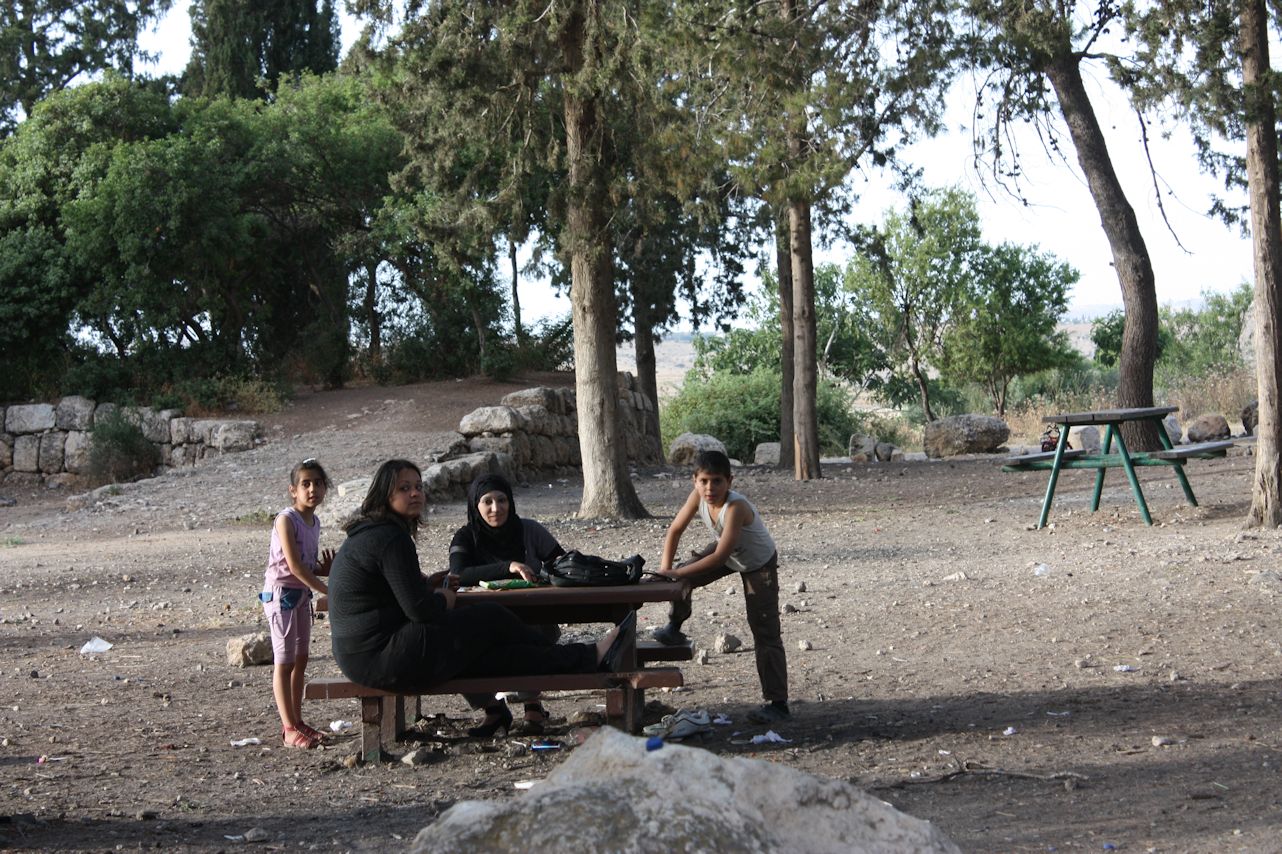
Last month, I organized a remembrance action at the location of the village of Imwas, which was destroyed by the Israeli military after the 1967 war.

The story behind the action is what I think is probably most interesting — you can read the correspondence between me and Mohyeddin, a son of Imwas, in this Facebook note:

This Letter Is 20 Years Overdue

You can also see more pictures, readings, links and responses on the Facebook page I opened for the event.

Emwas Remembrance Project

*****************************************************************************************

Report from the Zochrot website, the organization that helped me carry out the event:

Act of Recognition at Imwas Village

06/2012

Tsipi is waiting for you

On Saturday, May 26, 2012, a group of us went out to create an event at the location where the Palestinian village Imwas once stood.

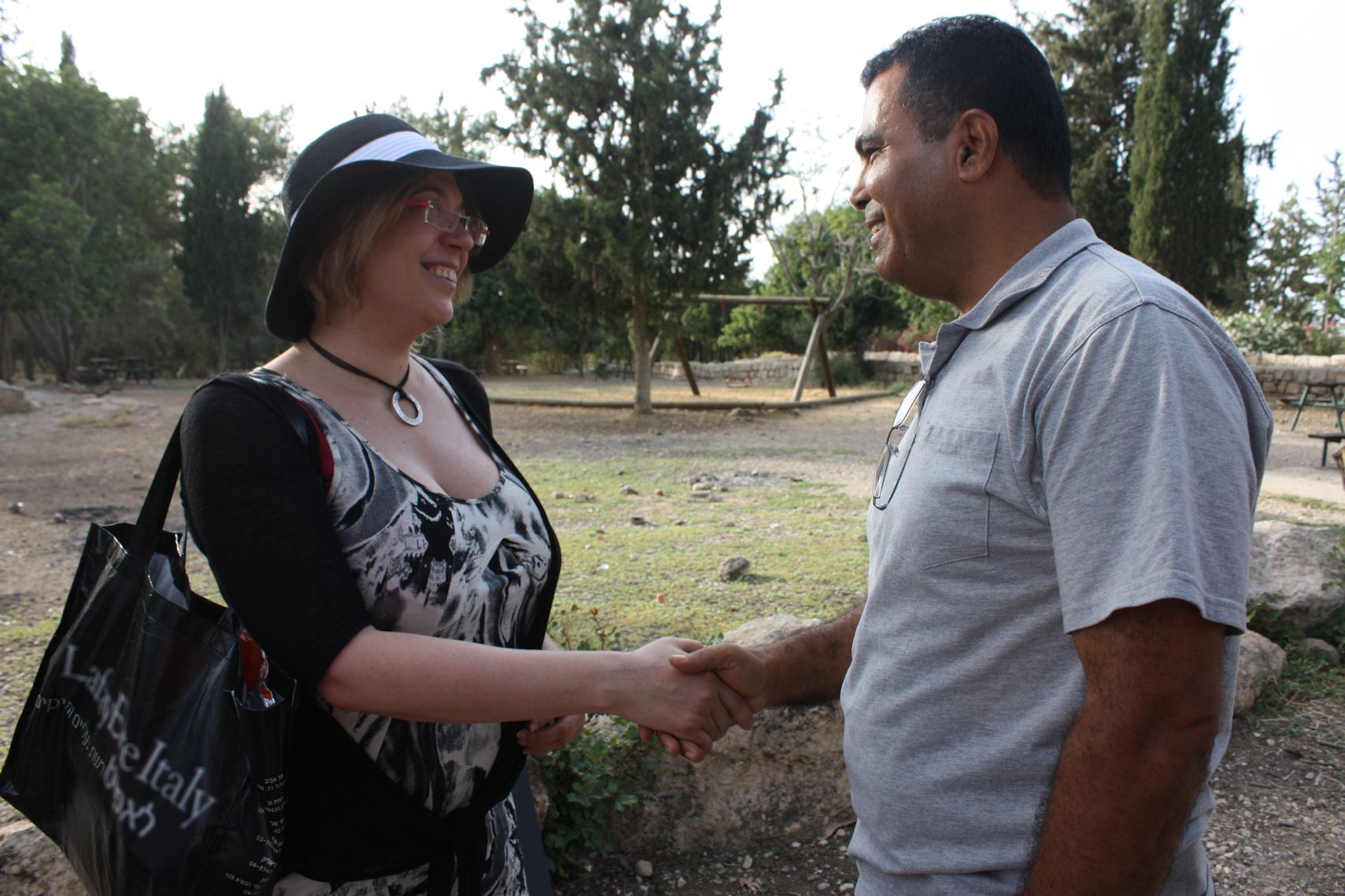
The background to the event was personal: Twenty years ago I met in the US a Palestinian man named Mohyeddin Abdulaziz. Few months ago I wrote him a letter apologizing for my shabby treatment of him back then, and thanking him for the part he played in my own political development.

He answered me, and told me about the destruction of the village and the expulsion of its residents in 1967. He asked that if ever I found myself in the recreational park built on the location where the village once stood, that I think of him, and of peace, and of justice.
I felt that it was entirely inadequate that I think of this issue only if I happen to find myself at that location. I felt this was an excellent opportunity to connect between the personal and the political, and decided to go to where Imwas stood and make an event of it.

I turned to Zochrot for cooperation, and they offered their guide, Umar, to take us on an excursion to Imwas, and also offered to spread the word about the event.

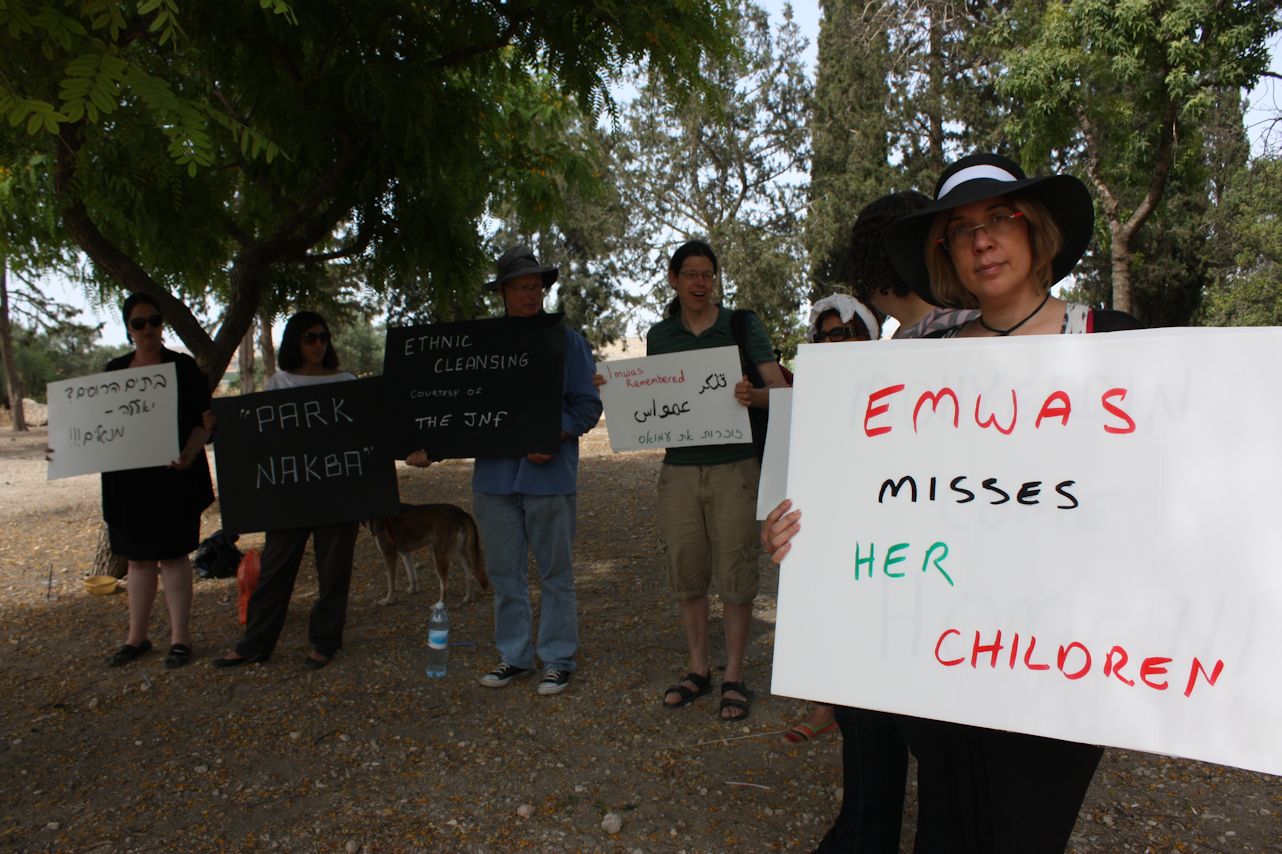
On the day of the event, we arrived with signs, such as “Imwas is Here” and “Ethnic Cleansing Courtesy of the JNF”. We read some texts we prepared in advance, and did a photo shoot of the signs and building remnants.

Afterwards, when Umar guided us through the village, we called Mohyeddin on the phone so he could be with us as we toured his village. When we managed it, we added video to the call. In his conversations with Mohyeddin, and with the help of a map of Imwas created by Zochrot together with refugees from the village, Umar was able to discern the exact location of Mohyeddin’s home. We took a picture to commemorate the spot, even though there is no sign that a house ever stood there.

The experience of being there, understanding that there used to be a community, with houses and schools and cafes – made all the more real by the presence of a son of Imwas, who could speak with us and hear us, even if only by phone – was both exciting and upsetting.

Watching people having barbecues there, seeing the few remains of houses, looking at the lists of donors (who undoubtedly were not told the park was built upon a destroyed village)… I, at least, am changed by that day, and it is clear to me that the event is not yet over. That event will continue, whether through additional projects that grow out of the acquaintance with Imwas and Mohyeddin, or if simply because the place and its story continue to live within us. Because as long as we remember it, we have not allowed Imwas to be totally erased.

Read the letters of Tsipi and Mohyeddin and comments on facebook.


Facebook censors cartoons against racism, capitalism

Facebook censors cartoons against racism, capitalism.

(But leaves the racist pages alone — including those calling for rape, murder, and other horrors – F.I.)

********************************************************************************************

The comic artist Mysh is one of my favorites in Israel. His work is not only conscious and critical, but also brilliantly drawn and at times, extremely funny. Last year I posted here his “Israeli Machine” video, which captured the hope I saw in the J14 movement more than any 1000-word essay I have written on this issue.

Mysh’s drawings have since turned more critical and dark, reflecting the change in the national mood as the summer of hope turned into an Israeli winter. Yet some of those recent works have been incredibly popular on Facebook, shared and liked by thousands of Israelis; other pieces even got some international attention. That’s when Facebook began to censor Mysh.

“A couple of days ago, I got a message that one of my works, titled The Real Superhero, was removed from the site,” Mysh told +972 over the phone today. “I actually suspected it was the nudity – the drawing is showing a naked Clark Kent, with the S carved on his chest – maybe it was too much for some people. But this morning, I couldn’t get into my Facebook account, and I saw that another one of my sketches, titled A Problem of Self Esteem, was also removed.”

Here is The Real Superhero:

The Real Superhero (by Mysh)

And this is the Problem of Self Esteem, a work inspired by the latest race riot in Tel Aviv.

A Problem of Self Esteem (by Mysh)

The Hebrew on the back of the muscular man has all kinds of popular racist slogans: “A good Arab is a dead Arab;” “Death to the Sudanese,” “Run over the Dosim (degrading name for Orthodox Jews);”Russians to Russia, Ethiopians to Ethiopia,” and more.

Mysh was also warned by Facebook that further flagging of his work would lead to the removal of his page. He was banned from the site for 24 hours.

“When they removed a third work, titled the Green Sabrah, I understood that there was something systematic here, and that I have to take care of it. I wrote a letter to Facebook, but the reply was that the department that dealing with my problem is on leave until June 6th.”

“The Green Sabrah: In control. But not in control of himself” (by Mysh)

“My work is critical and provocative, but I don’t think I am violating any of the house rules. My images are not inciting to violence, pornographic or extremely graphic. I really don’t know what to do now. The irony is that I have been praising Facebook recently as this amazing tool for promoting your art. I don’t have a site and I dread the thought that I will have to be a multi-platform person. I am quite bad with technology. I guess this was a kind of a wake up call for me, that this place I trusted is censored too.”

Mysh is 34, lives in Tel Aviv; he also directs films and animation. If you want to support him, joinhis Facebook page. We will also be featuring his work here on +972 from time to time. And for those who missed it, here is The Israeli Machine:

Highlighting Women

New Revolutionary Women post!

Phoolan Devi

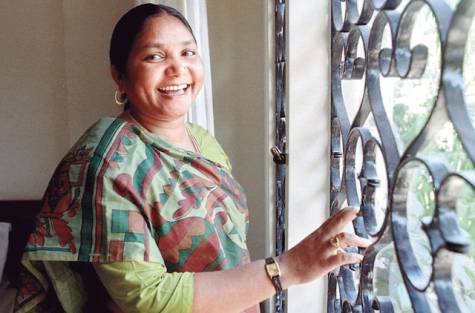
Phoolan DeviKnown as India’s Bandit Queen, Phoolan Devi stole from
the rich and gave to the poor. Her story evolved from being a member of a “lower” Indian caste, being forced into marriage at the age of 11, being raped and tortured… First by her husband, then by the police, and later by upper-caste members of her village. She escaped, and took revenge upon her tormentors (she stabbed her husband and dragged him out to the village square; later, she shot dead the villagers who raped her).

She proceeded to fight the caste wars as a field revolutionary, was charged with crimes and went to jail, and later on entered politics representing the lower-caste Samajwadi Party as an MP. Hated by some, she was a hero and a legend to the many she represented.

Phoolan Devi was assassinated in 2001 by three masked men in New Delhi.

View biographic timeline

…… 

Ibtisam Mara'ana

Ibtisam Mara’ana is a Palestinian-Israeli documentary filmmaker, perhaps best-known for her film Paradise Lost, considered to be the first film to be made from the perspective of a Palestinian woman. She is the founder of Ibtisam Films, a documentary film production house.

Ibtisam Mara'ana

Mara’ana was awarded the Dalai Lama’s Unsung Heroes of Compassion award in 2009 for her social and political activism for peace and on behalf of battered women in Arabic society.

Read an intervew with Mara’ana about her mother as feminist inspiration

View an interview with Mara’ana about her work:

Kasha Jacqueline Nabagesera

Kasha Jacqueline NabageseraFor Kasha Jacqueline Nabagesera, being an LGBT rights activist means the daily threat of violence, imprisonment, and death. In Uganda, homosexuality is punishable by long jail terms, and violence is common. Her colleague, David Kato, was murdered last year because of his activism and voice against Uganda’s discrimination.

Nabagesera is widely recognized for her fearless human rights activism as founder of the LGBT rights organization Freedom and Roam Uganda.

In 2011 Nabagesera won the Martin Ennals Human Rights Defenders Award:


Bicycle Chain Sculptures by Seo Young Deok | Oddity Central

It’s been a while since I’ve posted anything of a lighter nature — here is some must-see art!

Seo Young Deok’s Bicycle Chain Sculptures Are Off the Chain

By Spooky on February 24th, 2012

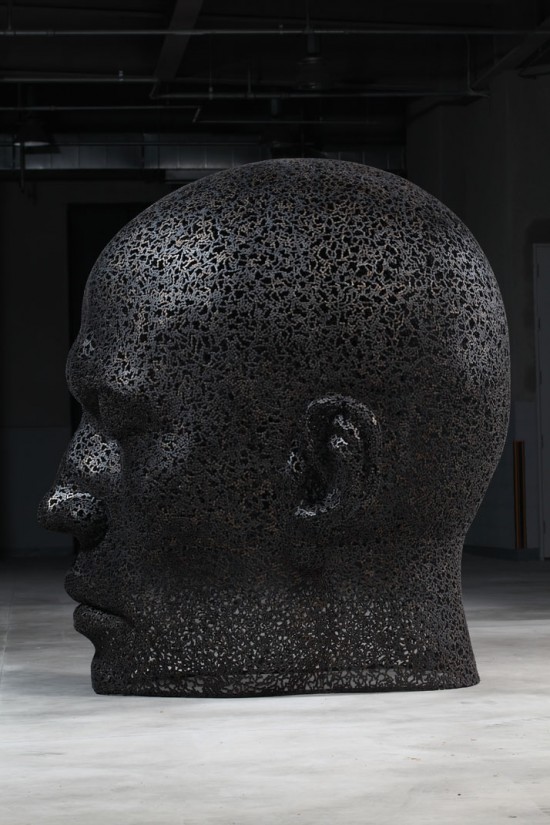
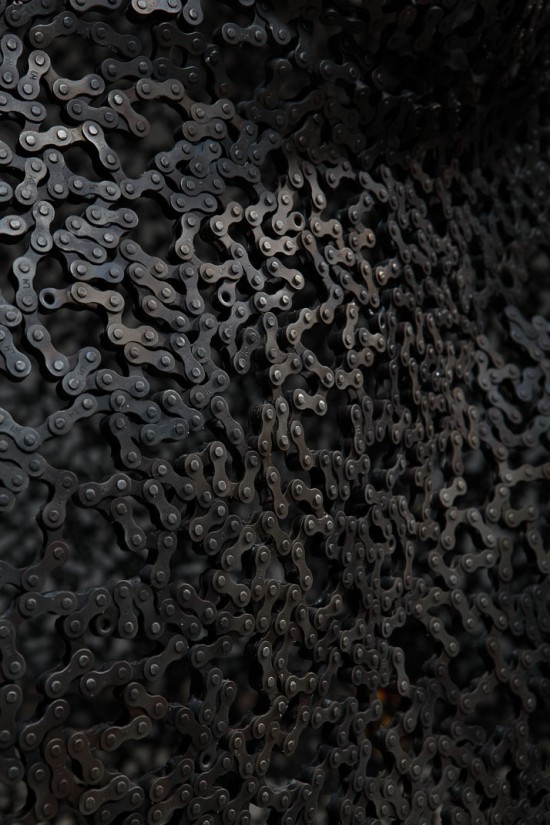
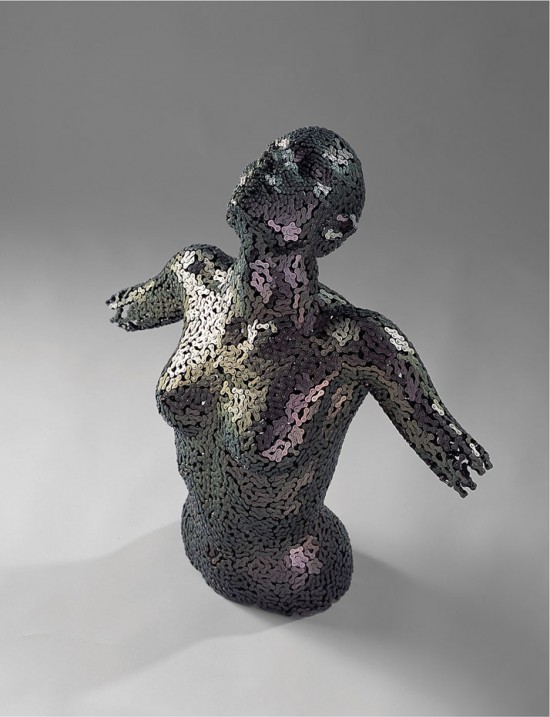
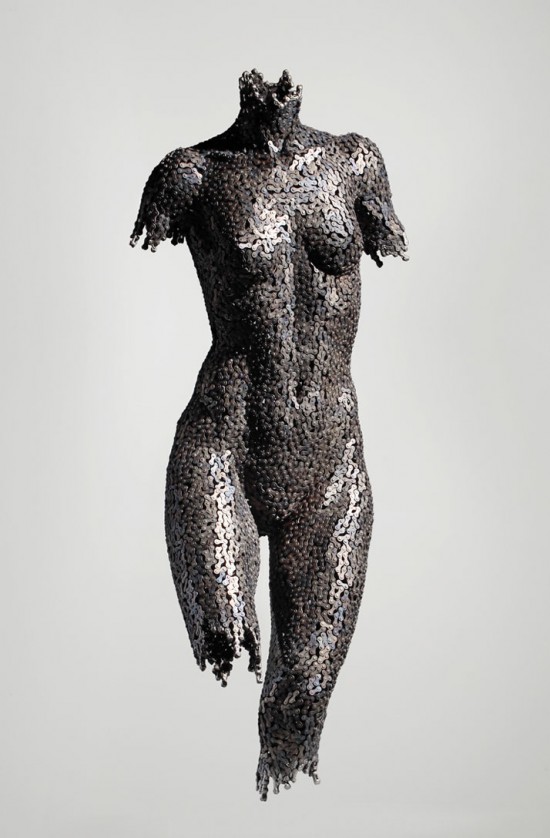
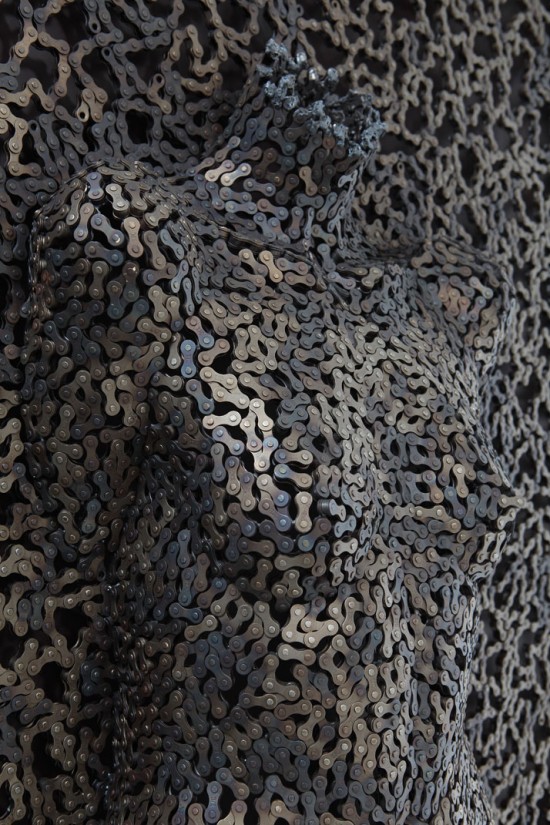
You’ve probably seen sculptures made from bicycle chains, but I bet they’re nothing like the ones created by South Korean artist, Seo Young Deok.The incredible ‘works of Seo Young Deok are clearly inspired by the shapes of the human body, but artists have been sculpting masterpieces based on our natural curves for hundreds of years. What makes this Korean designer special is the material he uses for his unique creations – bicycle chains. Miles of metal chains, to be exact, welded in such a way that they recreate the human body to the finest details. Deok says he finds inspiration for his art in crowded markets, and metro or bus stations, but also in Buddhist sculptures and paintings, which he has alway admired. “I like Asia Beauty” he says, “so most features of my work seem to take an Asiatic pose”.

All of the artworks in Seo Young Deok’s newest series, Dystopia, are very impressive, but the 7ft 6in head called Nirvana clearly stands out. The stunningly detailed human head is made of over a mile of bicycle chains, and costs over $40,000. The artist spent over a year painstakingly welding every piece of chain to create this realistic masterpiece. His collection also includes a human torso that was completed in over two months, and an entire human body he finished in four months.

via Bicycle Chain Sculptures by Seo Young Deok | Oddity Central – Collecting Oddities.