Translucent Ants Photographed Eating Colored Liquids | Colossal

Scientist Mohamed Babu from Mysore, India captured beautiful photos of these translucent ants eating a specially colored liquid sugar. Some of the ants would even move between the food resulting in new color combinations in their stomachs. Read more over on the Daily Mail. (via notcot)


via Translucent Ants Photographed Eating Colored Liquids | Colossal.

Emwas Remembered

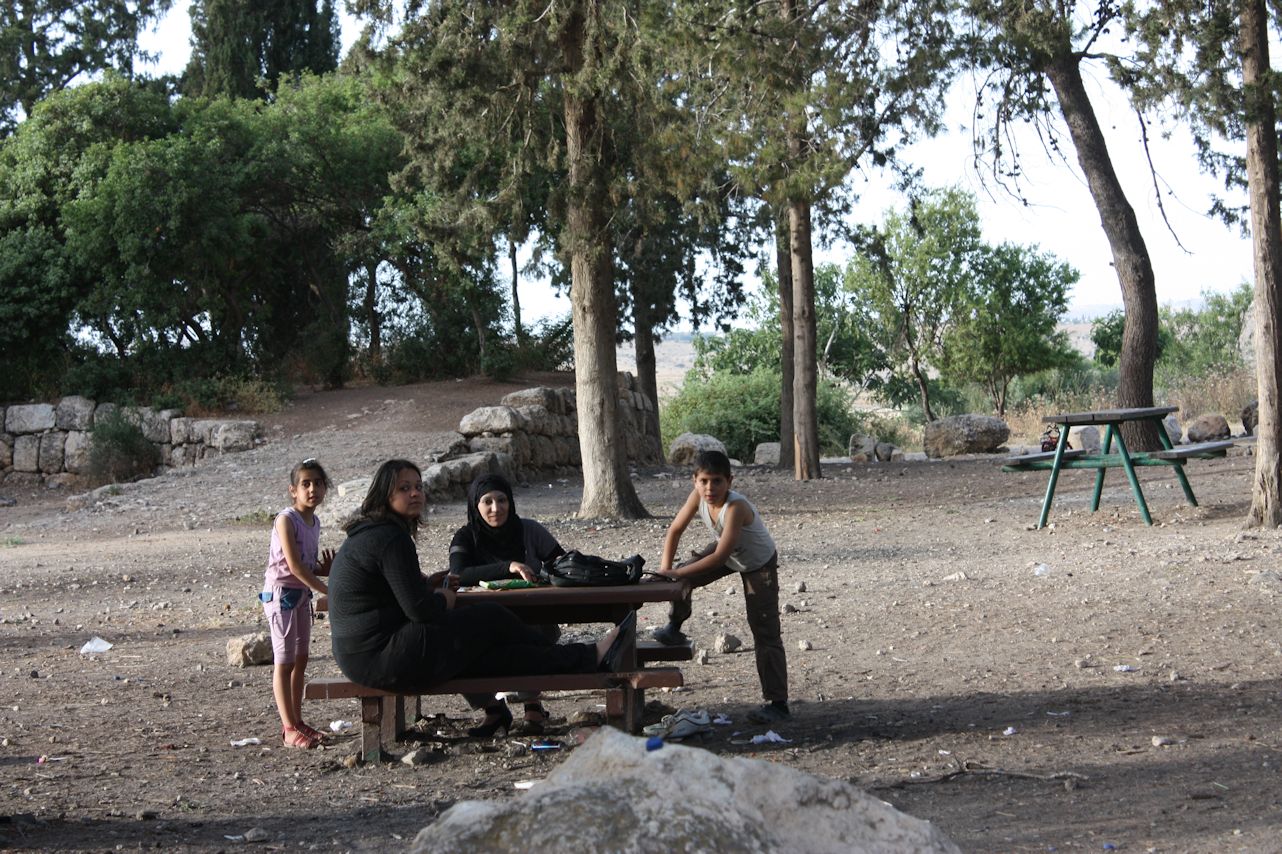
Last month, I organized a remembrance action at the location of the village of Imwas, which was destroyed by the Israeli military after the 1967 war.

The story behind the action is what I think is probably most interesting — you can read the correspondence between me and Mohyeddin, a son of Imwas, in this Facebook note:

This Letter Is 20 Years Overdue

You can also see more pictures, readings, links and responses on the Facebook page I opened for the event.

Emwas Remembrance Project

*****************************************************************************************

Report from the Zochrot website, the organization that helped me carry out the event:

Act of Recognition at Imwas Village

06/2012

Tsipi is waiting for you

On Saturday, May 26, 2012, a group of us went out to create an event at the location where the Palestinian village Imwas once stood.

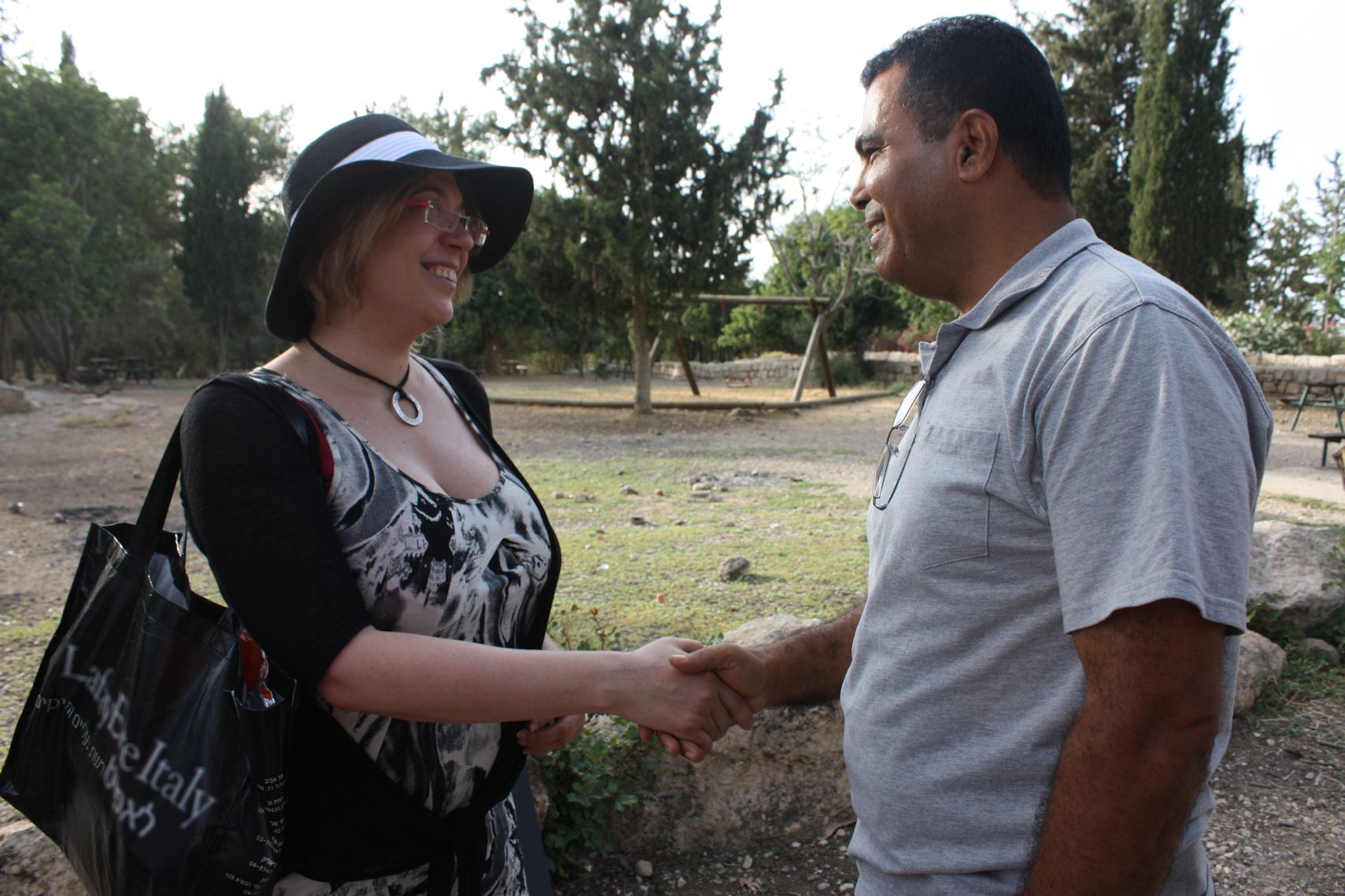
The background to the event was personal: Twenty years ago I met in the US a Palestinian man named Mohyeddin Abdulaziz. Few months ago I wrote him a letter apologizing for my shabby treatment of him back then, and thanking him for the part he played in my own political development.

He answered me, and told me about the destruction of the village and the expulsion of its residents in 1967. He asked that if ever I found myself in the recreational park built on the location where the village once stood, that I think of him, and of peace, and of justice.
I felt that it was entirely inadequate that I think of this issue only if I happen to find myself at that location. I felt this was an excellent opportunity to connect between the personal and the political, and decided to go to where Imwas stood and make an event of it.

I turned to Zochrot for cooperation, and they offered their guide, Umar, to take us on an excursion to Imwas, and also offered to spread the word about the event.

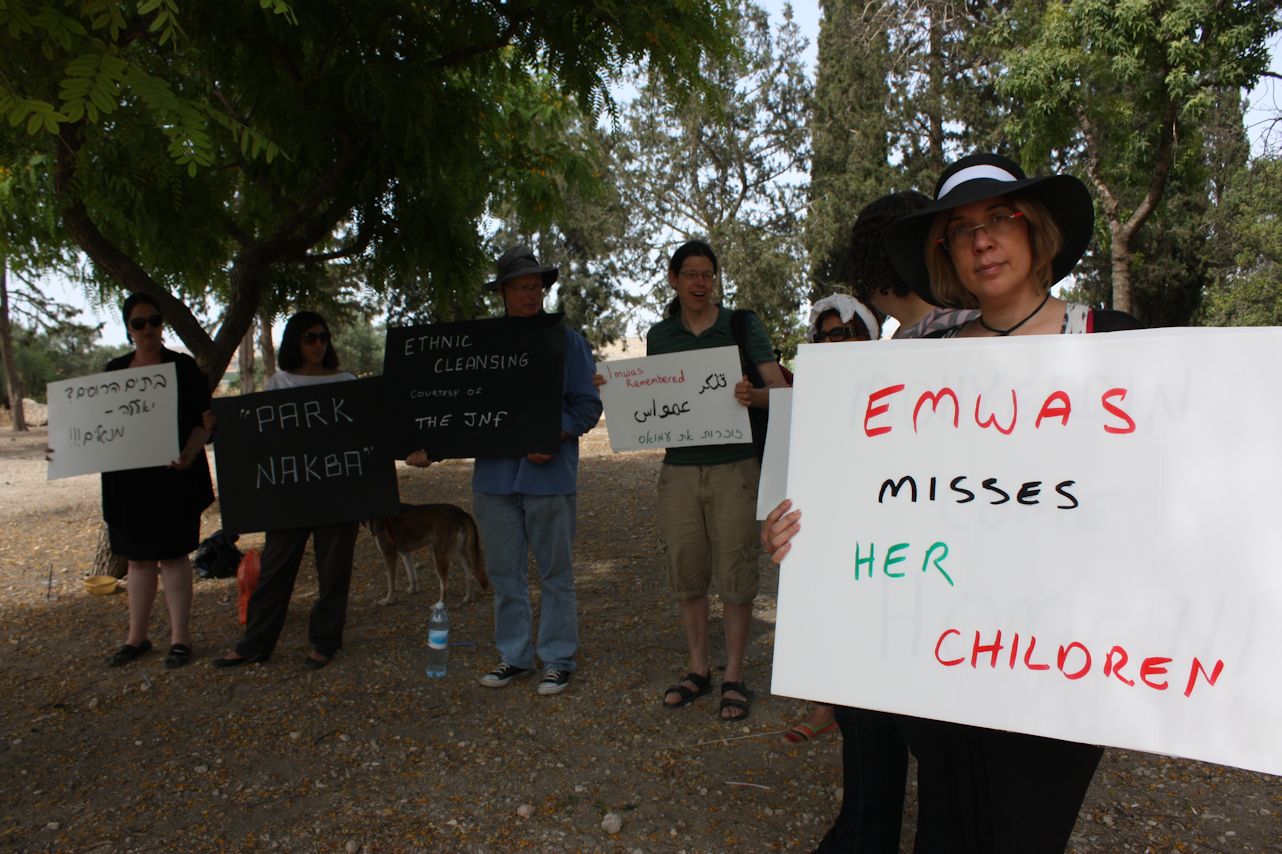
On the day of the event, we arrived with signs, such as “Imwas is Here” and “Ethnic Cleansing Courtesy of the JNF”. We read some texts we prepared in advance, and did a photo shoot of the signs and building remnants.

Afterwards, when Umar guided us through the village, we called Mohyeddin on the phone so he could be with us as we toured his village. When we managed it, we added video to the call. In his conversations with Mohyeddin, and with the help of a map of Imwas created by Zochrot together with refugees from the village, Umar was able to discern the exact location of Mohyeddin’s home. We took a picture to commemorate the spot, even though there is no sign that a house ever stood there.

The experience of being there, understanding that there used to be a community, with houses and schools and cafes – made all the more real by the presence of a son of Imwas, who could speak with us and hear us, even if only by phone – was both exciting and upsetting.

Watching people having barbecues there, seeing the few remains of houses, looking at the lists of donors (who undoubtedly were not told the park was built upon a destroyed village)… I, at least, am changed by that day, and it is clear to me that the event is not yet over. That event will continue, whether through additional projects that grow out of the acquaintance with Imwas and Mohyeddin, or if simply because the place and its story continue to live within us. Because as long as we remember it, we have not allowed Imwas to be totally erased.

Read the letters of Tsipi and Mohyeddin and comments on facebook.


Facebook censors cartoons against racism, capitalism

Facebook censors cartoons against racism, capitalism.

(But leaves the racist pages alone — including those calling for rape, murder, and other horrors – F.I.)

********************************************************************************************

The comic artist Mysh is one of my favorites in Israel. His work is not only conscious and critical, but also brilliantly drawn and at times, extremely funny. Last year I posted here his “Israeli Machine” video, which captured the hope I saw in the J14 movement more than any 1000-word essay I have written on this issue.

Mysh’s drawings have since turned more critical and dark, reflecting the change in the national mood as the summer of hope turned into an Israeli winter. Yet some of those recent works have been incredibly popular on Facebook, shared and liked by thousands of Israelis; other pieces even got some international attention. That’s when Facebook began to censor Mysh.

“A couple of days ago, I got a message that one of my works, titled The Real Superhero, was removed from the site,” Mysh told +972 over the phone today. “I actually suspected it was the nudity – the drawing is showing a naked Clark Kent, with the S carved on his chest – maybe it was too much for some people. But this morning, I couldn’t get into my Facebook account, and I saw that another one of my sketches, titled A Problem of Self Esteem, was also removed.”

Here is The Real Superhero:

The Real Superhero (by Mysh)

And this is the Problem of Self Esteem, a work inspired by the latest race riot in Tel Aviv.

A Problem of Self Esteem (by Mysh)

The Hebrew on the back of the muscular man has all kinds of popular racist slogans: “A good Arab is a dead Arab;” “Death to the Sudanese,” “Run over the Dosim (degrading name for Orthodox Jews);”Russians to Russia, Ethiopians to Ethiopia,” and more.

Mysh was also warned by Facebook that further flagging of his work would lead to the removal of his page. He was banned from the site for 24 hours.

“When they removed a third work, titled the Green Sabrah, I understood that there was something systematic here, and that I have to take care of it. I wrote a letter to Facebook, but the reply was that the department that dealing with my problem is on leave until June 6th.”

“The Green Sabrah: In control. But not in control of himself” (by Mysh)

“My work is critical and provocative, but I don’t think I am violating any of the house rules. My images are not inciting to violence, pornographic or extremely graphic. I really don’t know what to do now. The irony is that I have been praising Facebook recently as this amazing tool for promoting your art. I don’t have a site and I dread the thought that I will have to be a multi-platform person. I am quite bad with technology. I guess this was a kind of a wake up call for me, that this place I trusted is censored too.”

Mysh is 34, lives in Tel Aviv; he also directs films and animation. If you want to support him, joinhis Facebook page. We will also be featuring his work here on +972 from time to time. And for those who missed it, here is The Israeli Machine:

Highlighting Women

New Revolutionary Women post!

Phoolan Devi

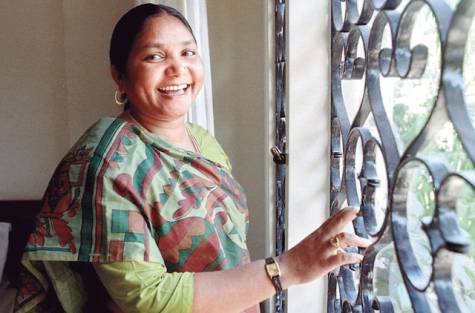
Phoolan DeviKnown as India’s Bandit Queen, Phoolan Devi stole from
the rich and gave to the poor. Her story evolved from being a member of a “lower” Indian caste, being forced into marriage at the age of 11, being raped and tortured… First by her husband, then by the police, and later by upper-caste members of her village. She escaped, and took revenge upon her tormentors (she stabbed her husband and dragged him out to the village square; later, she shot dead the villagers who raped her).

She proceeded to fight the caste wars as a field revolutionary, was charged with crimes and went to jail, and later on entered politics representing the lower-caste Samajwadi Party as an MP. Hated by some, she was a hero and a legend to the many she represented.

Phoolan Devi was assassinated in 2001 by three masked men in New Delhi.

View biographic timeline

…… 

Ibtisam Mara'ana

Ibtisam Mara’ana is a Palestinian-Israeli documentary filmmaker, perhaps best-known for her film Paradise Lost, considered to be the first film to be made from the perspective of a Palestinian woman. She is the founder of Ibtisam Films, a documentary film production house.

Ibtisam Mara'ana

Mara’ana was awarded the Dalai Lama’s Unsung Heroes of Compassion award in 2009 for her social and political activism for peace and on behalf of battered women in Arabic society.

Read an intervew with Mara’ana about her mother as feminist inspiration

View an interview with Mara’ana about her work:

Kasha Jacqueline Nabagesera

Kasha Jacqueline NabageseraFor Kasha Jacqueline Nabagesera, being an LGBT rights activist means the daily threat of violence, imprisonment, and death. In Uganda, homosexuality is punishable by long jail terms, and violence is common. Her colleague, David Kato, was murdered last year because of his activism and voice against Uganda’s discrimination.

Nabagesera is widely recognized for her fearless human rights activism as founder of the LGBT rights organization Freedom and Roam Uganda.

In 2011 Nabagesera won the Martin Ennals Human Rights Defenders Award:


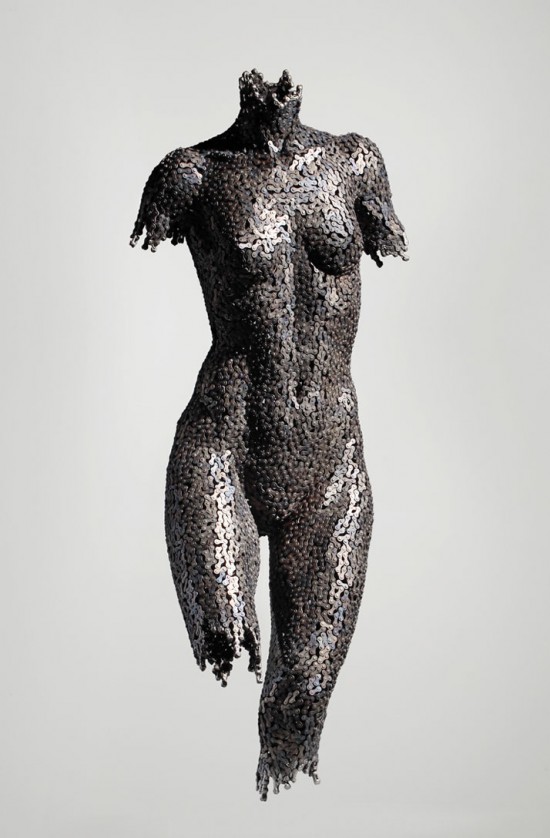
Bicycle Chain Sculptures by Seo Young Deok | Oddity Central

It’s been a while since I’ve posted anything of a lighter nature — here is some must-see art!

Seo Young Deok’s Bicycle Chain Sculptures Are Off the Chain

By Spooky on February 24th, 2012

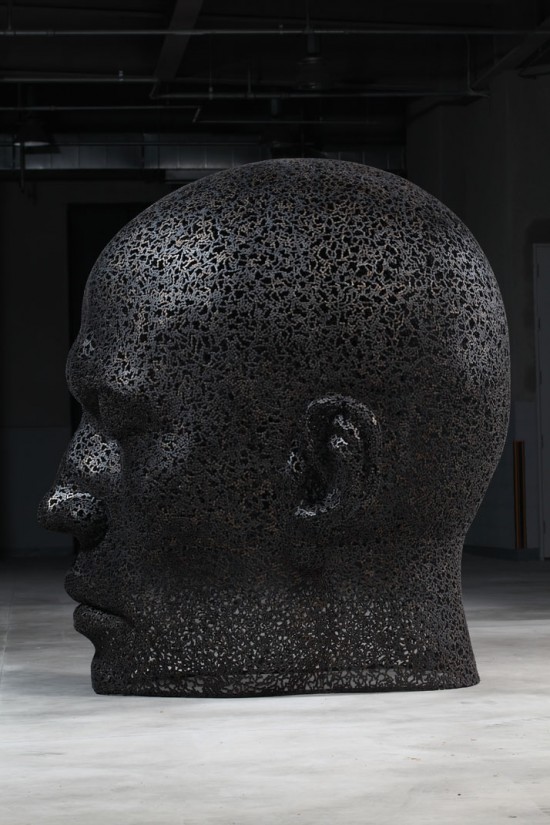
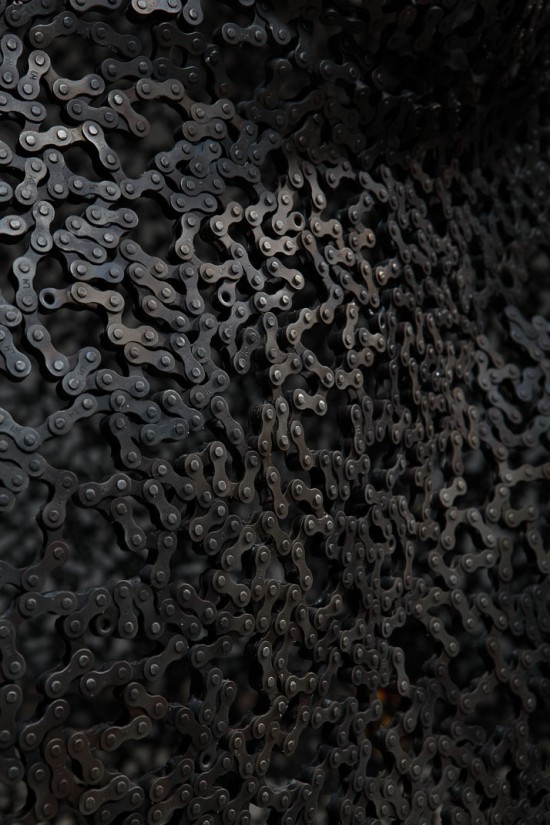
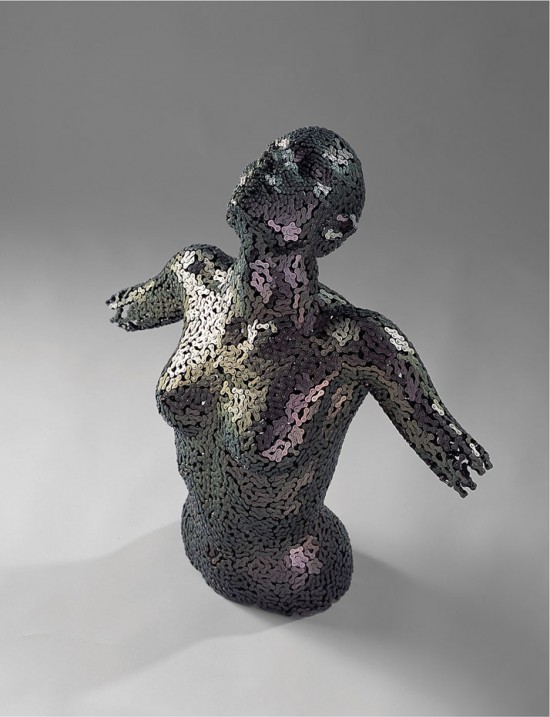
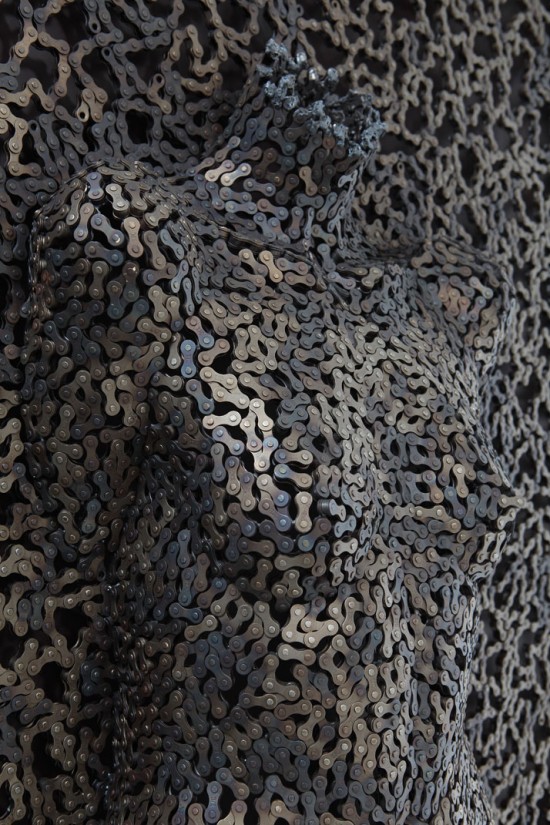
You’ve probably seen sculptures made from bicycle chains, but I bet they’re nothing like the ones created by South Korean artist, Seo Young Deok.The incredible ‘works of Seo Young Deok are clearly inspired by the shapes of the human body, but artists have been sculpting masterpieces based on our natural curves for hundreds of years. What makes this Korean designer special is the material he uses for his unique creations – bicycle chains. Miles of metal chains, to be exact, welded in such a way that they recreate the human body to the finest details. Deok says he finds inspiration for his art in crowded markets, and metro or bus stations, but also in Buddhist sculptures and paintings, which he has alway admired. “I like Asia Beauty” he says, “so most features of my work seem to take an Asiatic pose”.

All of the artworks in Seo Young Deok’s newest series, Dystopia, are very impressive, but the 7ft 6in head called Nirvana clearly stands out. The stunningly detailed human head is made of over a mile of bicycle chains, and costs over $40,000. The artist spent over a year painstakingly welding every piece of chain to create this realistic masterpiece. His collection also includes a human torso that was completed in over two months, and an entire human body he finished in four months.

via Bicycle Chain Sculptures by Seo Young Deok | Oddity Central – Collecting Oddities.

Afghanistan’s Supergran Crimebuster on Wheels

Afghanistan Woman Village Chief

It’s unusual for a woman to be a leader in Afghanistan but Zarifa Qazizadah has become the country’s only female village chief through force of personality and determination to get things done – even if that means cross-dressing, wearing a false moustache and driving around on a motorbike at night.

“I tell the men of the village, all I want is your prayers,” she says. “When you have a problem, I’ll speak to the government on your behalf and whenever there is any disturbance at night-time, I’ll pick up my gun and come to your house to see what’s going on.”

When the mother of 15 first sought political office, and told local men she wanted to connect the village to the electricity grid, they laughed.

That was in 2004. She lost the election, but she got the electricity all the same, and two years later the men asked her to apply for the post of head of the village – Naw Abad in the country’s northern Balkh province.

Now she guards the electricity supply with a vengeance, and if anyone wires their home up and starts stealing it, they have to watch out.

“I can’t let that happen because we have to respect the law,” she says.

————————————————————————————————————

Women in Power in Afghanistan

  • Habiba Sarabi became the first female governor in Afghanistan in Bamyan province in 2005
  • Fawzia Koofi was the first female deputy speaker of the Afghan parliament
  • One quarter of the seats in the Afghan parliament are reserved for women
  • Qazizadah is not the first woman to have held the position of village chief – another woman in a nearby village beat her to it, but she recently died

————————————————————————————————————

“When something happens in the village at night and I have to react quickly, I’ll put on men’s clothes and ride my motorbike.”

Women in rural Afghanistan are rarely seen riding motorbikes alone and Qazizadah disguises herself, with the clothes and a fake moustache, to avoid attracting too much attention.

She has also been known to come to the rescue of her villagers by wrestling Jeeps out of ditches with a tractor.

“She does the type of work that even men are not capable of doing,” says Molavi Seyyed Mohammad, one of her local supporters.

Qazizadah does not take “No” for an answer.

To keep her promise to voters on the electricity supply, even though she failed in her bid to get elected to parliament, she travelled to the Afghan capital, Kabul, with her four-year-old daughter and went straight to the home of the Minister for Power, Shaker Kargar, demanding to speak to him.

He agreed to see her the following day in his office, and by the end of the meeting he had given his consent.

There was one problem – the village itself had to pay for the posts and cables.

Qazizadah, who had already sold some of her jewellery to pay for the trip to Kabul, borrowed money wherever she could and remortgaged her house to raise the necessary capital.

Only one third of Afghanistan's population have access to electricity

Only one third of Afghanistan’s population have access to electricity

Five months later, everyone in the village had electricity in their home. “It was only then that people recognised what I’d done and started to pay me back,” she says.

The income from the electricity system was poured into construction of a new bridge over a dangerous river, connecting the village with a major road.

Qazizadah also sponsored the building of Naw Abad’s first mosque. Unlike most mosques in the country, it is designed so that men and women pray together.

“When people saw the work I was doing on these projects, they would start to join in,” she says.

“Now people can pray in their own village and the local boys don’t have to go so far to learn how to read the Koran.”

All this is a profound achievement for a woman who was married at 10 years old – and just 15 when she became a mother.

For much of her young adult life, she lived in a very remote village with her husband’s family where, she says, she was little more than a servant.

During Taliban rule, she moved to the regional capital, Mazar-e-Sharif, with her husband, where she had her first taste of community work, volunteering to help parents get their children vaccinated. Covertly, she helped teach young girls to learn to read.

Now aged 50, with 36 grandchildren, she is head of the local women’s council, as well as village head, and hosts large meetings of local women in her home, encouraging them to follow her example.

“I was just a housewife like you,” she told a group of 50 women at one of her recent gatherings.

“But today I can have a meeting with 1,000 people. I can meet and discuss issues with authorities. In Western countries, women can become presidents. These women are brave and they can achieve a lot.”

Zarifa Qazizadah spoke to Outlook on the BBC World Service. Listen to the programme here.

via BBC News – Afghanistan’s supergran crimebuster on wheels.
Study: The Objectification of Women Is a Real, Measurable Phenomenon – The Atlantic

Study: The Objectification of Women Is a Real, Measurable Phenomenon

MAY 24 2012, 10:47 AM ET 12

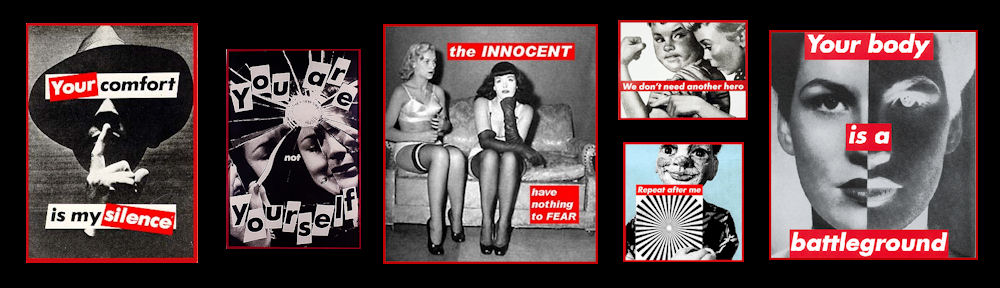
Both male and female subjects in a recent experiment perceived near-naked men in sexualized ads as human beings, but could only see attractive women as objects.

PROBLEM: Women’s bare bodies are on display in billboards, movie posters, and many other kinds of ads. Though plenty of studies have looked at the ramifications of this pervasive sexual objectification, it’s unclear if we see near-naked people as human beings or if we really do view them as mere objects.

Women Are Much Happier When Men Feel Their Pain

Older Women Need More Sex Education Too

Why ‘Titanic’ and Other Tragic Movies Make Us Happy

METHODOLOGY: Researchers led by Philippe Bernard presented participants pictures of men and women in sexualized poses, wearing a swimsuit or underwear, one by one on a computer screen. Since pictures of people present a recognition problem when they’re turned upside down, but images of objects don’t have that problem, some of the photos were presented right side up and others upside down. After each picture, there was a second of black screen before each participant was shown two images and was asked to choose the one that matched the one he or she had just seen.

RESULTS: The male and female subjects matched the photos similarly. They recognized right-side-up men better than upside-down men, suggesting that they saw the sexualized men as persons. On the contrary, the women in underwear weren’t any harder to recognize when they appeared upside down, indicating that the sexy women were consistently identified as objects.

CONCLUSION: People objectify women in sexualized photos, but not men.

SOURCE: The full study, “Integrating Sexual Objectification With Object Versus Person Recognition: The Sexualized-Body-Inversion Hypothesis,” is published in the journal Psychological Science.

via Health – Hans Villarica – Study: The Objectification of Women Is a Real, Measurable Phenomenon – The Atlantic.

If Americans Knew — What every American needs to know about Israel/Palestine

via If Americans Knew – what every American needs to know about Israel/Palestine.

The Israeli-Palestinian conflict is one of the world’s major sources of instability. Americans are directly connected to this conflict, and increasingly imperiled by its devastation.

It is the goal of If Americans Knew to provide full and accurate information on this critical issue, and on our power – and duty – to bring a resolution.

Please click on any statistic for the source and more information.
Statistics Last Updated: October 25, 2011

Israeli and Palestinian Children Killed
September 29, 2000 – Present

126 Israeli children have been killed by Palestinians and 1,476 Palestinian children have been killed by Israelis since September 29, 2000. (View Sources & More Information)

Chart showing that approximately 12 times more Palestinian children have been killed than Israeli children

Israelis and Palestinians Killed
September 29, 2000 – Present

Chart showing that 6 times more Palestinians have been killed than Israelis.

1,096 Israelis and at least 6,568 Palestinians have been killed since September 29, 2000. (View Sources & More Information)

Israelis and Palestinians Injured
September 29, 2000 – Present

10,792 Israelis and 59,575 Palestinians have been injured since September 29, 2000. (View Sources & More Information.)

Chart showing that Palestinians are injured at least four times more often than Israelis.

Daily U.S. Military Aid to Israel and the Palestinians
Fiscal Year 2011

Chart showing that the United States gives Israel $8.2 million per day in military aid and no military aid to the Palestinians.

During Fiscal Year 2011, the U.S. is providing Israel with at least $8.2 million per day in military aid and $0 in military aid to the Palestinians. (View Sources & More Information)

Current Number of Political Prisoners and Detainees

Chart showing that Israel is holding 5,604 Palestinians prisoner.

0 Israelis are being held prisoner by Palestinians, while 5,604 Palestinians are currently imprisoned by Israel. (View Sources & More Information)

Demolitions of Israeli and Palestinian Homes
1967 – Present

0 Israeli homes have been demolished by Palestinians and 24,813 Palestinian homes have been demolished by Israel since 1967. (View Sources & More Information)

Chart showing that 24,145 Palestinian homes have been demolished, compared to no Israeli homes.

Israeli and Palestinian Unemployment Rates

Chart depicting the fact that the Palestinian unemployment is around 4 times the Israeli unemployment rate.

The Israeli unemployment rate is 6.4%, while the Palestinian unemployment in the West Bank is 16.5% and40% in Gaza. (View Sources & More Information)

Current Illegal Settlements on the Other’s Land

Israel currently has 236 Jewish-only settlements and ‘outposts’ built on confiscated Palestinian land. Palestinians do not have any settlements on Israeli land. (View Sources & More Information)

Chart showing that Israel has 227 Jewish-only settlements on Palestinian land.