Palestine-Israel Medley

Selected posts and articles from the Israel/Palestine frontier. Mostly about women, of course. 

Palestinian artist is removed from art competition

Larissa Sansour is an award-winning interdisciplinary artist, who uses Middle-East politics in her work. Sansour was shortlisted for the 2011 Lacoste Elysée Prize, an art competition hosted by the Swiss Musée de l’Elysée, with funding from the Lacoste clothing brand.

The theme of the competition this year was la joie de vivre, and participants were given free rein to interpret this any way they desired. Sansour’s project, Nation Estate, envisioned “a Palestinian state rising from the ashes of the peace process.” The project depicted a science fiction-style Palestinian state in the form of a single skyscraper housing the entire Palestinian population.

Sansour was then notified that Lacoste requested she be removed from the competition, as her work was too “pro-Palestinian”. Controversy ensued, with accusations of censorship against Lacoste and the Musée de l’Elysée. The museum eventually withdrew from hosting the competition. The museum and Lacoste stated that Sansour’s work did not fit the theme. The museum offered to do a separate exhibit of Sansour’s work.

♦ Larissa Sansour Speaks Out
 Detailed interview with Larissa Sansour
 Larissa Sansour’s Nation Estate

Palestine: Women First / Photographic Exhibition

Photographed by Mati Milstein and curated by Saher Saman, the exhibition will open May 25th at Marji Gallery & Contemporary Projects, in Santa Fe, New Mexico

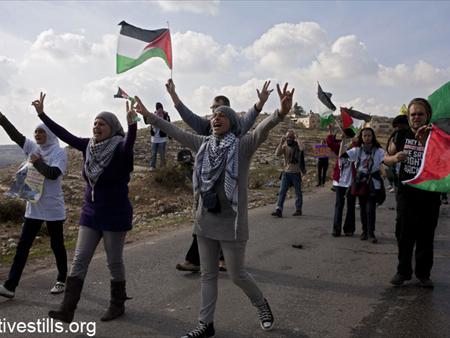
“This is the story of a new generation of radical Palestinian activists who stand out from their society in the most distinct way: they are women. These activists are on the front lines of West Bank protest, they are beaten and face arrest and sexual harassment for their bold role. “ Read more…

Palestine: Women First II from Mati Milstein on Vimeo.

Milstein was inspired to do this project by the following analysis by Gila Danino-Yona, on photographic documentation of women in the Arab Spring:

Women of the Revolution, or Revolutionary Women?

How have women been depicted in these Arab Spring uprisings? Danino-Yonah identified several typical categories.

.
Category I – Weakened Femininity

Women crying, women frightened, women throwing up, women screaming….


.Category II – A Woman is Always a Woman

Women cleaning, women preening, women pretty in pink and chatting on the phone…
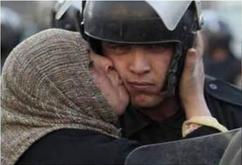
Category III – Thanks to Our Men

Women being grateful, women being worshipful, women swelling with maternal pride…

.
Category IV – Female Gaddafi supporters beyond the consensus
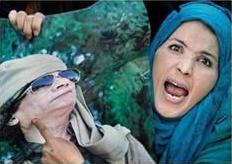
The “good” women are represented according to the feminine stereotypes above. But when a woman supports, say, Gaddafi, she is shown ugly, angry, scary, crazed, violent…

.

But – if you look for them – you will find revolutionary women, too.

Maybe not the typical image shown, but they were certainly there!

(You can see my personal take on some revolutionary women here)

Reflections of an Arab Jew

This article is by an American, but it relates directly to the Israeli-Arab conflict. One of the major casualties of this conflict is the identity of millions of Jews who are from Arab countries. In today’s political climate, “Arab” and “Jew” are deemed opposites. What does that do to someone who is both? Especially when the “Jew” in that equation is assumed to be European — related to via European literature, humor, art, food, music… That they have nothing to do with?

Ella Habiba Shohat is only the second person I have had the privilege to read on this greatly underrepresented topic, and I am so glad I found this short, but poignant article.

B’Tselem West Bank Video

B’Tselem is the Israeli Information Center for Human Rights in the Occupied Territories.

In January 2007, B’Tselem launched its camera distribution project, a video advocacy project, providing Palestinians living in high-conflict areas with video cameras, with the goal of bringing the reality of their lives under occupation to the attention of the Israeli and international public.

In 2011, volunteers in the camera project filmed over 500 hours of footage in the West Bank. The video was edited into two minutes meant to sum up the passing year

Women, women, & women

I’m not a fan of hierarchical lists. I think there are millions of brave and inspiring women who are unknown and unrecognized, whose bravery is in standing up every day to oppressive cultures, governments, and families; who go to work, protect their children, survive violence, and more. I am publishing these lists to give recognition where I can, and to encourage more recognition, and more women to step up and step out – as much as they can. Because I firmly believe we are the ones who can, and will, bring the changes we want and need.

And because these women bring tears to my eyes and joy to my heart.

Amnesty International’s 50 Bravest Women in the World

From every continent, from every walk of life – these are women who have stood up to oppression on various fronts: Rape, women’s rights, political oppression, war, the environment, poverty, disease…

At any place and for any issue that needs righting, you will find women fighting.

Check out this online magazine by and about Kashmiri people, with great focus on women

Nobel Women

+972 Magazine chose a list of women activists from the Arab world as Person of the Year

Huffington Posts list of the 50 Best Moments for Women in 2011

Free birth control, girl-on-girl sailor action, Elizabeth Warren, the indomitable Rachel Maddow, the British monarchy goes modern, dancers, comedians, and women heading companies… Fun slideshow.

.
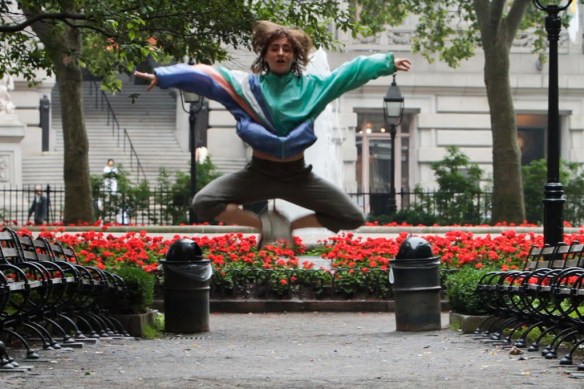
Standout performance here is Anne Marsen in Girl Walk All Day – if you don’t want to feel good, don’t watch this!

More info at http://girlwalkallday.com/

Forbes top 100 websites for women

Yes, it includes some mommy and lifestyle sites, but it also includes business/entrepreneurial websites, and feminist blogs (that are already on my blogroll! Check them out).

The Huff objects to how women are left off lists of the most important people of the year (noting that to even make the Times runner-up list, you need to be a princess. No other women were apparently outstanding this year. The Huff disagrees, and so do I). Here’s the Huffington list of top women.

Some additional women on MY list:

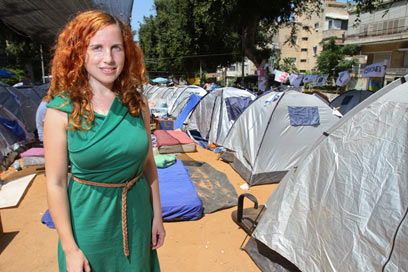
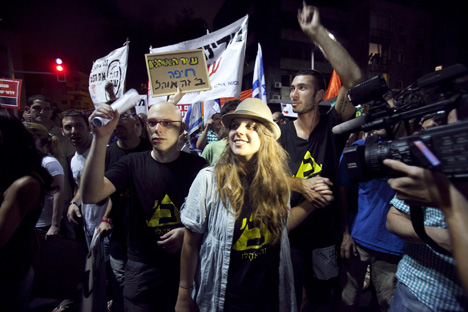
Daphne Leef and Stav Shafir are the two women leaders of Israel’s J14 social movement that was born when Leef staked a tent on a central Tel Aviv boulevard last summer, to protest out-of-control rent increases. The movement caught fire as Israelis from all walks of life joined to protest the cost of living, decreasing social rights, and increasing economic gaps. The protest wave brought hundreds of thousands of people out into the street in a way never seen before in the country.

What Occupy Wall Street Can Learn from Occupy Tel Aviv

Other links

Facebook page: Women Resisters to Authority

The Huff’s list of most ridiculous quotes about women in 2011, and who said them

Revolutionary women in this blog

After the Fall

Back to Nabi Saleh, after the murder of Mustafa Tamimi:
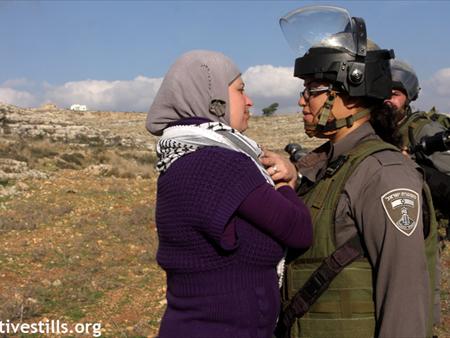
Sexual intimidation by the military, and the double standard for Israelis and Palestinians — even Israelis on the “wrong” side.

This post was begun the week after Mustafa Tamimi was killed, when local Palestinians and supporting activists went out again for their weekly protest. Tension was fierce, I am told, as everyone wondered if there would be more violence (there was).

Meanwhile, other events took over, and another weekly protest or two have come and gone. Ho hum. Back to the normal business of occupation and resistance. Which of course takes place in many other places, not only Nabi Saleh.

I want to share with you the testimony of activist Sahar Vardi, of that first time back after Tamimi’s murder (December 16, 2011):

A few minutes before I was arrested in Nabi Saleh on Friday, we were walking near the soldiers. I kept pretty close to them while they approached the main road, mainly because I knew that the other soldiers would not shoot tear gas in the vicinity of the soldiers – a sort of reverse human shield strategy. Anyway, I was walking, and I don’t remember anymore whether I spoke with them or not. I think I did, I think I asked them why they were there, and if they feel they are protecting something, someone, or me? And then one of the soldiers turned to me and asked: “How big is the Arab cock you’re getting?” Many answers ran through my mind, most if not all of them at the same level as his question. And no, I don’t answer, it’s better not to answer. I will gain nothing from it, I will be speaking with myself only if I say anything. And still, it echoes in my head for hours. It doesn’t harm me. It doesn’t bother me at that level. Or maybe it does, it harms me not as “me” but as a woman – and a political woman. It harms me because, as I explained to the interrogator later at my interrogation, at the point where they ask “Do you have anything to add” – and I had what to add – I want to add that a soldier asked me, “How big is the Arab cock I’m getting.”And the investigator stopped short in astonishment. Not so much because of the fact that the soldier asked me that, but more because of the fact that I said it. And he asked me why I said it, as I knew he would, and I had my answer ready, and I answered him, but fuck it, what does that mean, why did I say it? Why did HE say it?!

So here’s the explanation to the interrogator for what bothers me so much, and why I have to say it, and why I should file a complaint for sexual harassment if I identify the soldier: Because that soldier, in a single sentence that was to him just an insult and nothing more, removed from me, as a woman, any idea of free choice, any possibility of being a political being, of having positions and thoughts and ideas of my own. I am a tool. I am a sexual tool in the hands, or thoughts, or bed of a man. That’s what I know how to do, and that’s how my thoughts, ideas, and ideologies are formed. I am a woman – I am a sexual object – and anything I do, including protesting, is the result of a man objectifying me. I am a woman, I am a sexual object of the soldier or the Arab, ours or the enemy’s, but either way, it doesn’t matter which side I sleep with, their cock is what determines my opinions and thoughts. Their size it what determines whether I protest here, or enlist there. So that’s what aggravates me so much, that with just one sentence, without even thinking about it, that soldier put me back in the position of an object with no desires other than its sexual desires. An object that must be the property or objective for conquest of an instrument, and of course, it is size that determines whose instrument it will be; an object whose every thought, idea, or action is ultimately determined by one thing – a cock.

And to today’s double standard — emphasized by the heroism of two women: 

Vardi was arrested along with other protesters. As usual – the Israeli protesters were let go within a day, while the Palestinians were held over.

This time, Vardi and another woman – Ayala Shah – refused to be released until the Palestinians were released. Let’s just say it took a while.

See a video from the protest here: Who’s Afraid of Women’s Song?

Thursday Round-Up


There is far too much going on in the world, and much too little time to write about it…

But I have some good ones this week!

Culture & Media

The Worst Toys for Girls List

This Huffington Post list shows how toy manufacturers and retailers want your girl to aspire to: She can be a maid, or even a Hooter’s girl!

Pro-Virginity, Anti-Feminist Folks Make The Purity Myth Trailer Terrifying

Jezebel reviews the documentary The Purity Myth – based on feminist writer and Feministing founder Jessica  Valenti’s book of the same name.

“The film visits the places the book visited, but since the antics of pro-virginity culture were captured on camera this time around, it’s now infinitely more gif-able. From the creepy father-daughter “purity balls” where young women promise their dads that they won’t let anyone’s penis inside of them until God says it’s okay to the fearmongering but charismatic pro-virginity speakers who claim a link between female sexual activity and sterility, parts of the film (like parts of the book) would be hilarious if they weren’t so scary.”

.

From the Queer Blogosphere:

A friend posted this on Facebook. Not sure where it originated. But it’s sooo true!

Is this what BDSM is to you?

Weekly Trope:

This week’s trope: In TV and movies, when a bit of salacious BDSM is desired, there is only one scenario… All Women Are Doms, All Men Are Subs

Why we should just leave Kim Kardashian alone:

My new favorite blogger, Rachael, from the Social Justice League, writes about what’s wrong with the backlash of hatred against Kardashian and Co. — namely, that it’s sexist.

Shakesville concurs — here’s their post on the Kardashians.

Women's Activism

Not news, but recently came across several really amazing photo albums from International Women’s Day back in March. Nice to see! (click pics to see albums)

Women raise their hands as they shout slogans during a protest on International Women’s Day in Ahmedabad

Lebanese women working at an advertising company in Beirut dress like men and pose for pictures to make a statement about gender inequalities

In Israel

Refusing to go to the back of the bus

Tanya Rosenblit is being hailed by some as the Israeli Rosa Parks. Last week, she got on a bus from the town of Ashdod to Jerusalem. An Ultra-Orthodox man insisted she move to the back of the bus. She refused. The bus was stopped, police were called… Read all about it here.

And here’s another way kowtowing to the Ultra-Orthodox misogyny endangers women’s lives:

(Or: How can you educate women about breast cancer if you can’t use the word “breast”?)

.

Thursday Round-Up

Personal and work pressures make it difficult to be as focused as I’d like on my pet topics. But these great blogs and articles keep coming my way, so I thought I’d share some. If it works out I’ll do it regularly.

Gender Violence

Dear Abby, Thank You for Saving My Life

December 6 was Canada’s National Day of Remembrance and Action on Violence Against Women, held each year on the anniversary of the 1989 École Polytechnique Massacre, where 14 young women were killed for being women.

In this moving post, Marvelist shares her own story and her thoughts on Canada’s decreasing support for gender equality.

16 Days of Activism Against Gender Violence

The 16 Days of Activism Against Gender Violence is an annual international campaign that runs from November 25, International Day Against Violence Against Women, to December 10, International Human Rights Day. Over 2000 organizations in 154 countries have participated in the campaign.

I wanted to post this before the 16 days were over… Oh well. It’s worth noting anyway.

  • Nobel Women’s Round-UpIf you click on nothing else, DO check out the Nobel Women’s Initiative 16 Days of Activism blog: Each day features another amazing woman activist from a different part of the world: Palestine and Israel and the Congo and Iran and South America… Well, there are a lot of amazing women out there!!

  • And here is a great initiative that runs during the 16 days, aimed at encouraging girls and women to take control of technology and end violence.
    Take Back The Tech
From The Queer Activist Blogosphere

The Social Justice League’s blog post Fauxgress Watch: “Born This Way” examines why it is actually detrimental to queer folk to use the argument “we were born this way” or “being queer is not a choice!” as a justification for seeking rights/equality.

Nobel Peace Prize Winners

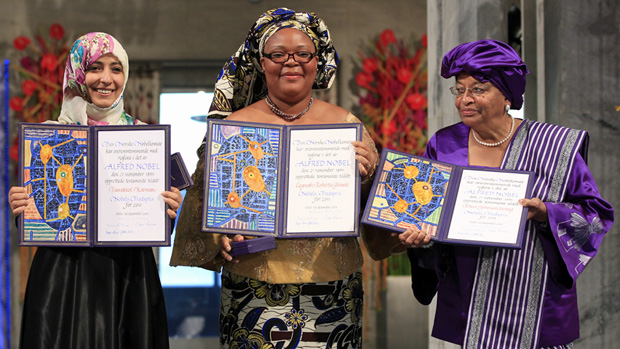
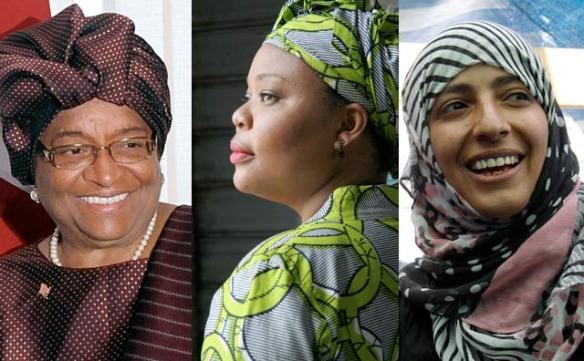
Of course, I had several tearful moments watching three women accept the Nobel Peace Prize. Women from areas fraught with violence, who were brave enough to find their personal power, raise their voices, become leaders, and make a change.

Heifer International – an organization committed to ending hunger and poverty – opine that these three women can start a movement.

Culture & Media

Deconstructing the Bechdel test

Ana Mardoll discusses what the Bechdel test is actually for.

Rethinking the Strong Female Character

Feminist literary blog Canonball’s thought-provoking post on why we might want to rethink what Hollywood considers to be strong female characters.

The weekly Trope

I will love and/or curse my lovely friend L. forever for getting me hooked on TV Tropes. Today’s trope: Abuse Is Okay When It Is Female On Male

And of course, the “shocking” discovery that rapists and men’s magazines sound suspiciously alike

An investment manager’s email asking for a second date 

This email had me laughing out loud in my office. There are a LOT of responses, but so many of them are just so hysterical it’s worth scrolling around a while.

In Israel

Israeli former president, Moshe Katsav, finally begins his prison sentence for rape!

This New Yorker blog post gives a quick history of the case.

How our fearless leaders REALLY see women (without their uniforms!!)

But sexism is still rife at the top of Israel’s government and military, as evidenced by the “joke” – caught on tape – in which Defense Minister Ehud Barak and army Chief of Staff Benny Ganz objectify female soldiers and one of the minister’s own media team. These two senior men then threaten the press if they release the tape.

Murder of Mustafa Tamimi

I began this as an item in my roundup, and it grew, and grew… So this horrible episode got its own post.

The Murder of Mustafa Tamimi

This is not the type of thing I normally write about. Not because it isn’t important, but because some issues are too big, complex, emotional, incendiary, and controversial for me to get a handle on. But this week I was swept up in this tragedy, so I want to include it here.

This was originally part of the round-up post I’ll be publishing shortly. But it got so big, and it is important enough to merit it’s own post. So in some ways it covers all the links to the event, reactions, lack of reaction, photos, video… And in other ways I still don’t feel it’s a complete post. I would normally give some background on the conflict, on Nabi Saleh, on the laws governing protests in the West Bank (or in other words — why Palestinians don’t get even the basic right to assemble)… I might share my own feelings about this, bring other examples of similar incidents, some statistics… But this is what I can do right now (and this is why I generally don’t do this kind of post!)

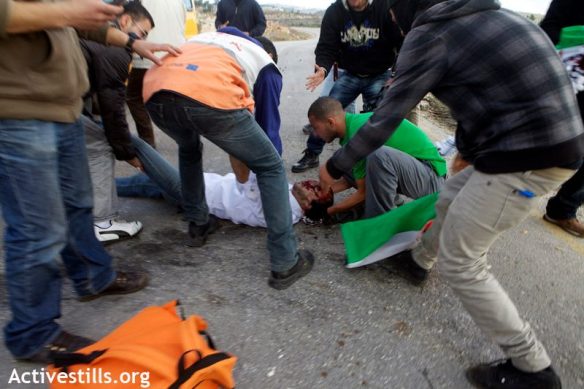
The short version: Mustafa Tamimi was a Palestinian who on December 9, 2011, participated in a protest (which takes place every week) in Nabi Saleh, a village near Ramallah (read more about the struggle in Nabi Saleh here). He was shot by an Israeli soldier, in the face, at close range, by a tear gas grenade (crowd control weapon designed for launching into the air; all prescriptive uses of this grenade launcher call for this use only, including the IDF’s own regulations). He died from his wounds.

Articles telling the story:

Here is a news article covering the story: Nabi Saleh Palestinian Shot In Head With Tear Gas Canister (warning: includes graphic photos)

Here is a chilling first person account of the event by Palestinian activist Linah Alsaafin.

And another by Ibrahim Bornat.

Videos:

Here is a video of the protest:

Here is a video that includes a photo sequence of the shooting

(warning: graphic photos)

Photo Album

Here is a Facebook photo album of the entire Nabi Saleh protest, including photos of Mustafa Tamimi being shot (warning: graphic photos)

.Here is the Israeli government’s response

Palestinian Protester Death an Exceptional Incident, Say IDF Officials

Here is a video proving it is NOT an exceptional incident, but rather a policy, “informal” as it may be:

.

And to add insult and injury on top of injury and insult, the Israeli military attacks mourners at Tamimi’s funeral

Human Rights for Palestinians?

The irony of Tamimi’s killing occurring on Human Right’s Day is not lost upon many of us.

Memorial For Palestinian Human Rights